Plan ahead High security · Six Points
High Security Locks in Six Points
You run a home office with client files and equipment, and your insurer has asked what kind of lock is on the door. The honest answer is the builder's knob lock and a light deadbolt from when the house was new.
Call now · open 24/7(289) 804-7704In plain words
Think of the upgrade as four layers working together. The cylinder resists picking, bumping and drilling. The deadbolt resists sawing and kicking with a long, hardened bolt. The strike and screws keep the frame from splitting when the door is struck. And the key control stops copies being made without your say-so. A locksmith assesses your door for each layer and tells you where it is weak, because a strong cylinder screwed into a soft frame gains you little. Most homes end up with a graded deadbolt and a patented cylinder; businesses often step up to laboratory-rated cylinders and heavier lock bodies.
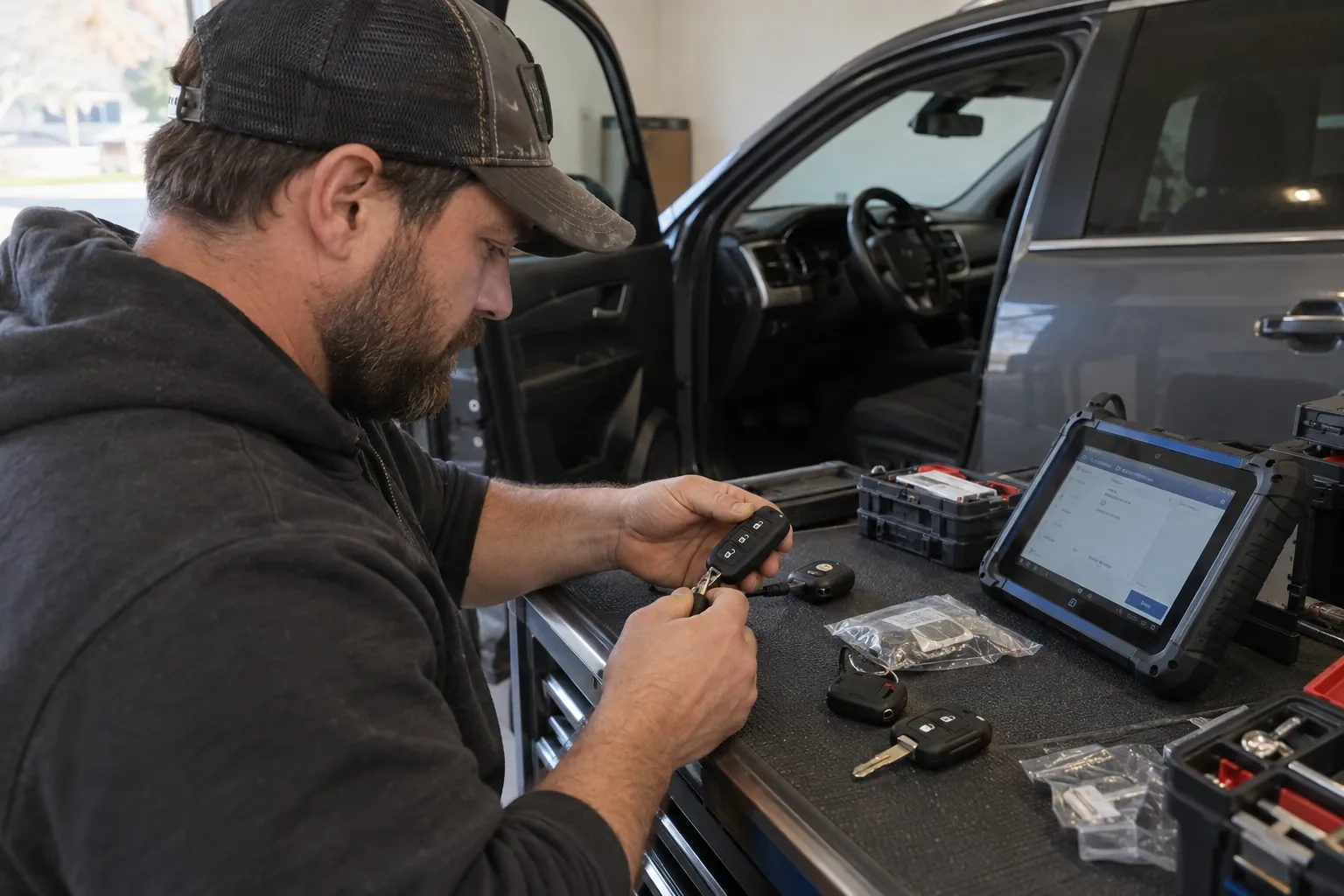
How the visit goesA colleague showed you a video of a lock being opened with a bump key in a few seconds. Then you went home and noticed your own deadbolt is the same style, bought at a hardware store a decade ago.
High Security Locks · Six Points
How the visit goes
- 1
Who holds keys and who should
For a business or a rental, the locksmith asks to see the key list, or helps you start one. Which keys exist, who carries them, which doors they open, and what happens when someone leaves. This is where the case for a patented or restricted key system becomes clear, because the system replaces guesswork with a register: every key numbered, every order authorised by a named person, and no blanks available outside the locksmith who manages it. The locksmith also asks how many people need to reach each area so the keying plan reflects the way the building actually runs.
- 2
Fitting a heavier deadbolt
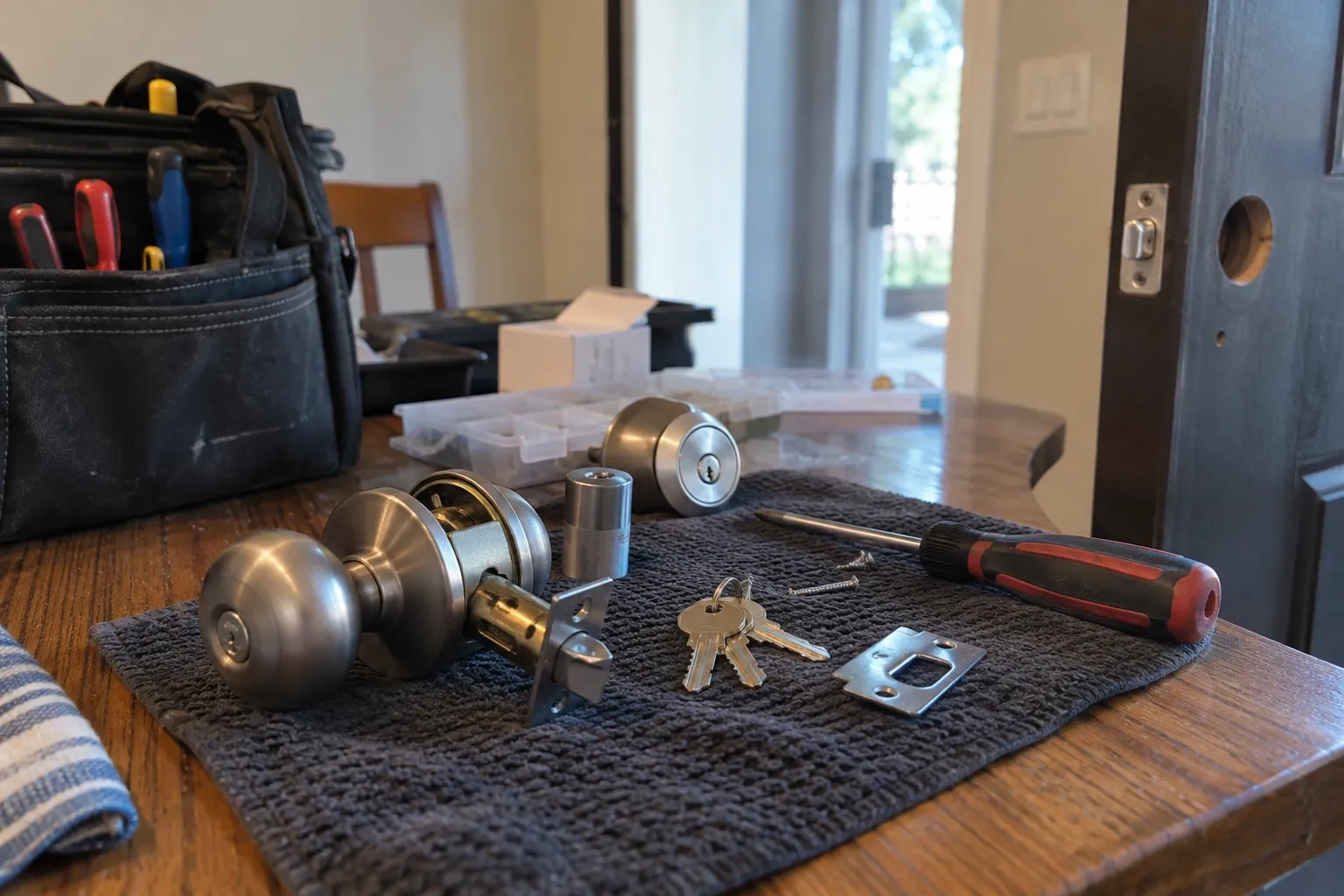
When the existing deadbolt is light or worn, the locksmith fits a graded deadbolt through the same bore where possible. The bolt throws a full inch and carries a hardened steel pin that turns under a saw blade, and the housing keeps part of the bolt supported against a kick. The latch is set in the edge bore with the correct backset, the exterior housing and interior thumb-turn are joined through the door with the long screws, and the final tightening is done by hand so nothing strips. The bolt is then thrown with the door open and closed to confirm it extends completely.
- 3
Watching the patent calendar
Patented keyways protect you for as long as the patent lasts. When it expires, blanks may be sold openly and the copy-control layer weakens, though the mechanical resistance of the cylinder stays. The locksmith notes the patent term of your system at handover so the date is not a surprise. Many years before it arrives, the same hardware can usually be moved to a newer patented keyway by changing cylinders and keys while the lock bodies stay. Treat it like a roof: nothing needs doing for a long while, but the date is written down.
In the van
- Pinning kit and plug follower
- High-security cylinder
- Commercial mortise lock body
- Graded deadbolt with hardened bolt
- Wrap-around door reinforcer
What affects the quote
- 1
Glass near the lock
Sidelights or glazed panels beside the deadbolt may call for a different function or extra hardware to keep the inside turn out of reach, always keeping easy exit in view.
- 2
Documentation and registration
Setting up the key register, recording signatories and providing a written schedule of cylinders and keys is real work on a business system and is listed rather than hidden.
- 3
Retiring the old keyway
If other doors stay on the old key for now, they may need rekeying so an unknown copy has nowhere to go; that is additional cylinder work alongside the upgrade.
Same fees day, night or weekend.
High Security Locks: questions
What actually makes a lock high security?
Three things working together. The cylinder has a second locking mechanism, usually a sidebar released by finger pins or rotating pins, plus hardened steel in the path of a drill, so picking, bumping and drilling take far longer than on an ordinary lock. The deadbolt and strike are heavier and fastened into the framing. And the key is cut on a patented or restricted blank that only an authorised person can have copied. Remove any one and the door is weaker than the label suggests.
What happens when the patent on my keys runs out?
The mechanical resistance of the cylinder does not change, but blanks may become openly available, so copy control weakens. Manufacturers issue new patented keyways as older ones expire, and the usual answer is to move to the next generation by changing cylinders and keys while keeping the lock bodies. Your locksmith notes the patent term at handover so the date is on the calendar rather than a surprise years later.
What is the difference between restricted and patented keys?
A restricted keyway is one the manufacturer supplies to a limited set of dealers, so blanks are harder to obtain but not legally protected. A patented key design is protected by a patent for a fixed term, and making or selling the blank without permission is unlawful during that time. Patented systems give the firmer control; restricted ones give a useful step up. The locksmith explains which your chosen line uses and when any patent expires.
High Security Locks
High Security Locks near you
Toronto, Ontario
Six Points information
- Town
- Six Points, Toronto, Ontario
- In business
- 16 years
- Hours
- Open 24/7 · nights, weekends and holidays, same fees
- Phone
- (289) 804-7704
- Visits
- On-site assessment preferred. Request a visit or call.
What the census means at the door
58%
Older homes. About 58% of homes in Toronto were built in 1980 or earlier, according to the 2021 Census.
Where most homes were built decades ago, doors often still carry their original mortise locks and brass knobs. That hardware can usually be cleaned, re-sprung and kept in service, with a modern deadbolt added above it for strength without losing the look.
23%
Single-detached houses make up about 23% of homes in Toronto (2021 Census).
In a building, a lockout happens in a hallway rather than a porch, and the neighbours notice. A locksmith confirms you belong to the suite, opens the door with the least fuss the lock allows, and leaves the door and cylinder intact for the night.
Nearby
Open 24/7
Request a visit
You run a home office with client files and equipment, and your insurer has asked what kind of lock is on the door.
Call now · open 24/7(289) 804-7704- On-site assessment preferred
- Same fees day, night or weekend
- 16 years in business