Change or rekey · Toronto
Gate & Building Entry Locks
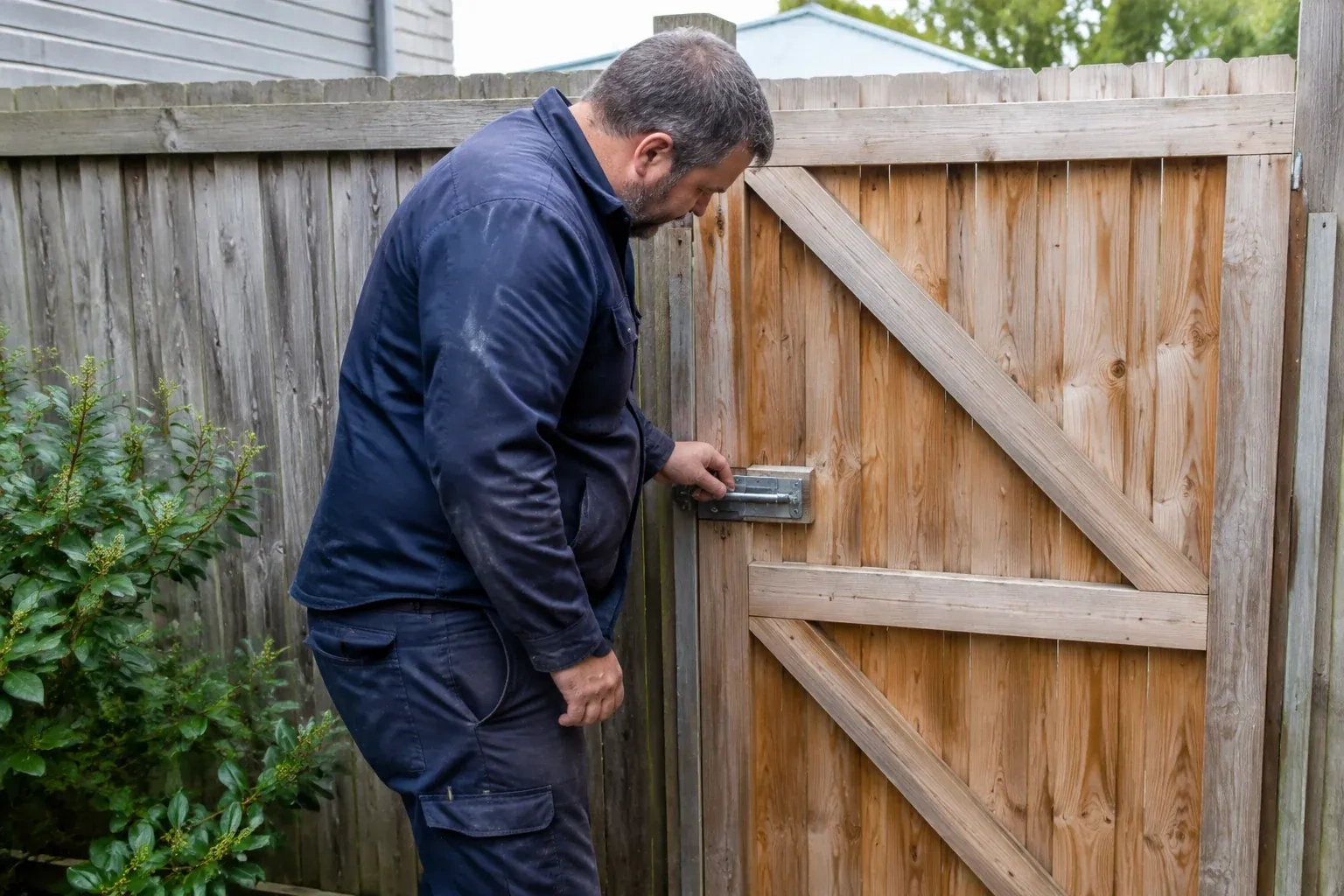
The gate to the side yard used to close with a satisfying click. After a winter of frost heaving the fence post, the latch now sits a full inch below where the strike is waiting for it, and the gate swings free no matter how hard it is pulled shut.
Call now · open 24/7(289) 804-7704In plain words
Hardware bolted to a gate or an exterior building door lives outside every day of the year, which is a different job from a lock tucked behind a storm door. This service treats that exposure as the starting point: cylinders rated for weather, fasteners that resist road salt, and a closer set up to keep working through a freeze-thaw cycle rather than seizing at the first cold snap. The result is a gate or entry that keeps operating through the season it is most likely to struggle in.
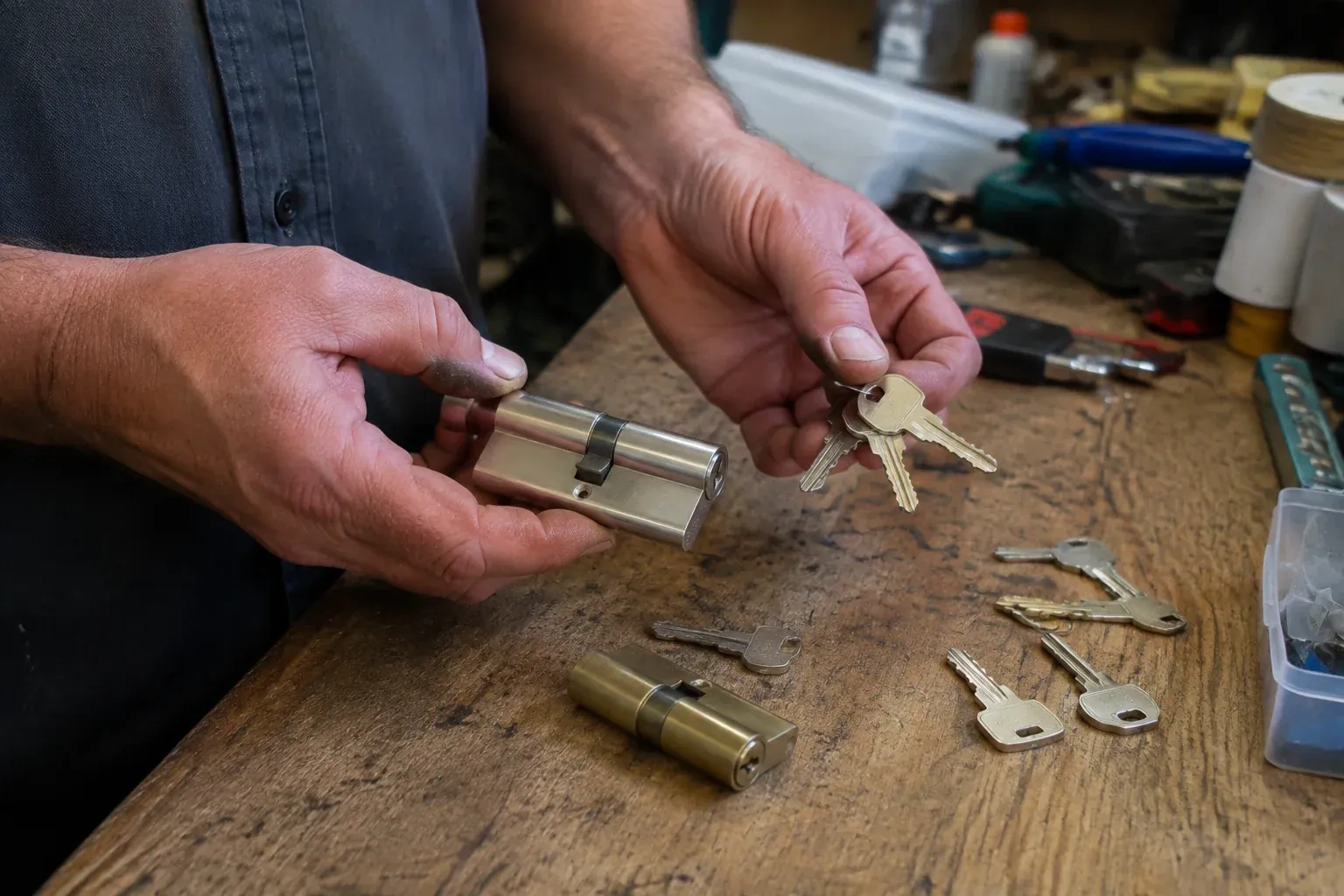
How the visit goesBetween the front gate, the side gate and the one behind the shed, there are three different padlocks, three different keys, and a growing pile of duplicates in a kitchen drawer that nobody can match to the right lock anymore.
Gate & Building Entry Locks · Toronto
How the visit goes
- 1
Reading how the gate or door actually moves
Before touching the lock, the locksmith watches the gate or door open and close by hand: how far it swings, whether it drags, sags or springs back with too much force, and where the latch lands relative to the strike. A gate held shut with a brick or a door propped for the mail carrier is a clue about what the lock is being asked to work against every day. This first look decides whether the real fix sits in the hardware, the hinges, or the frame the whole assembly hangs from, and it shapes every choice made afterward.
- 2
Bringing the closer into proper adjustment
Once the gate or door's swing has been read, the closer is adjusted in stages: overall closing speed, the final push that seats the latch, and how firmly the last few centimetres land. Each change is tested by cycling the gate several times before moving to the next adjustment, rather than guessing at a single setting. Where the arm, fittings or fluid are worn beyond adjusting, the closer is replaced with one sized to the gate's weight and width. The aim is a gate that swings its full arc, slows near the end, and settles into the latch on its own every time.
- 3
Hardware set up to last outdoors
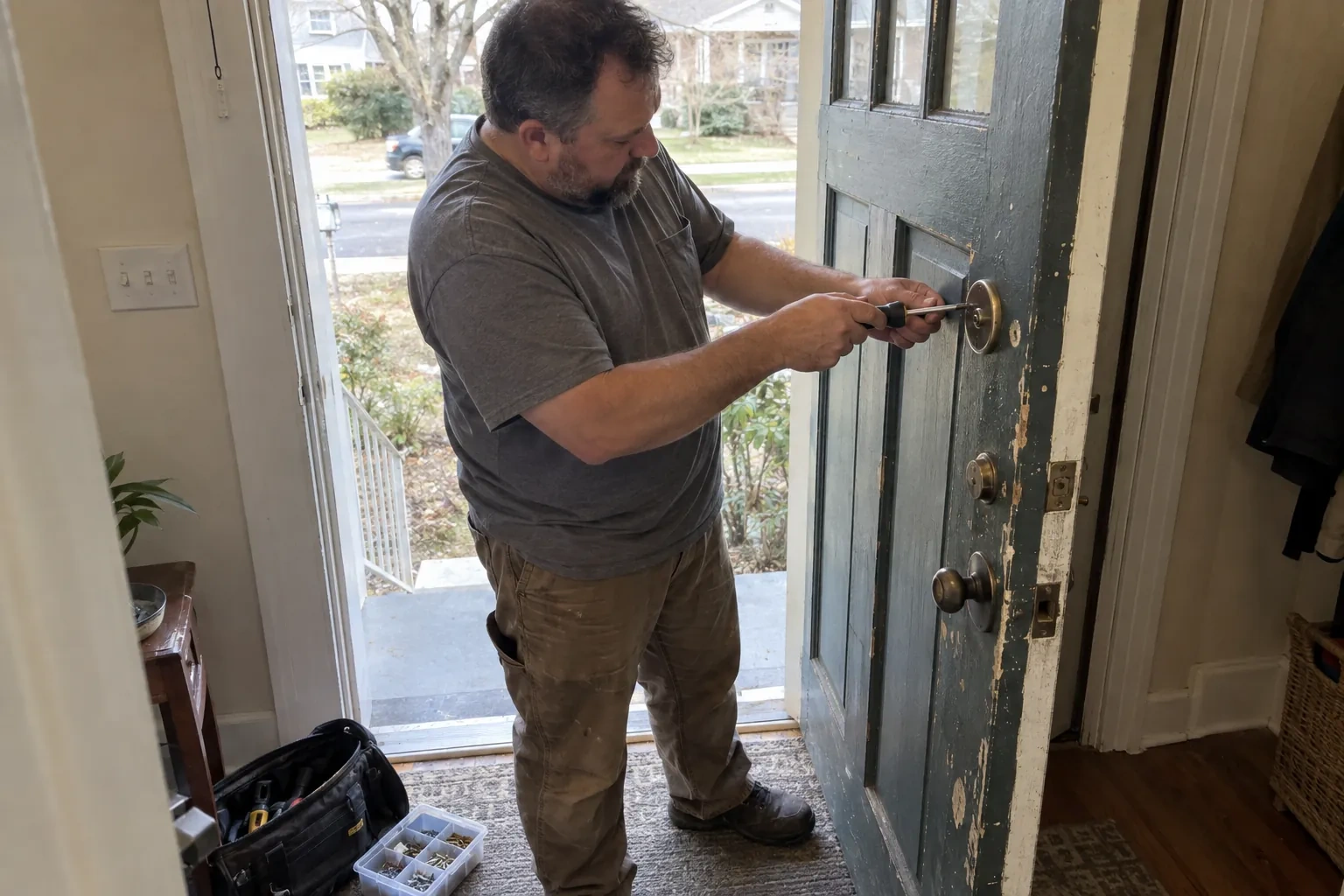
Anything replaced or adjusted during the visit is chosen and finished for life outside: corrosion-resistant fasteners, a cylinder rated for weather exposure, and a lubricant matched to whatever the cylinder maker specifies for it, since the wrong product collects grit and gums up in the cold. A light coat of that lubricant at the interval the maker recommends, worked through with the key a few times, keeps a cylinder turning smoothly well beyond what the hardware would otherwise manage sitting exposed at a gate or a street-facing door.
In the van
- Plug follower and repinning kit
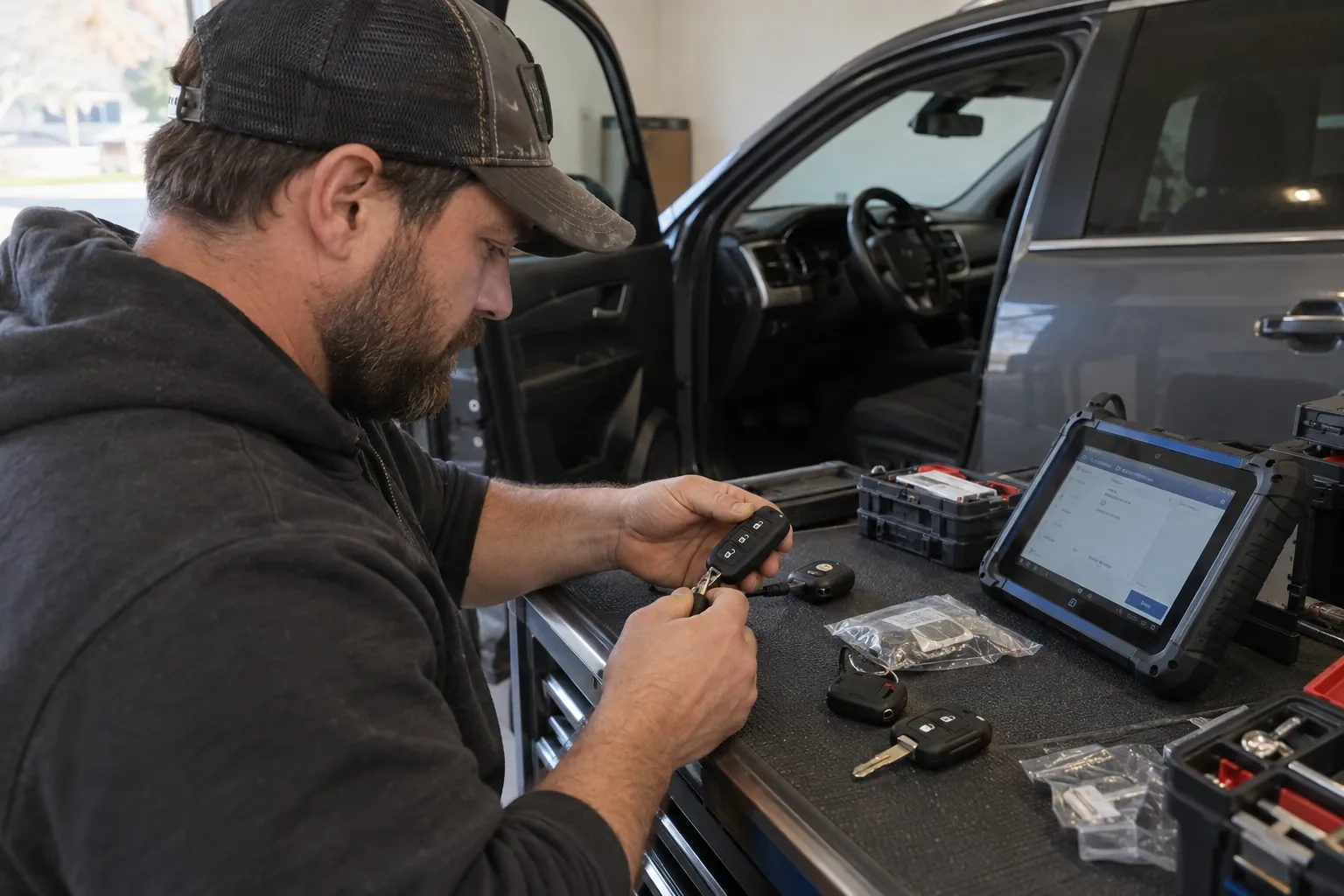
- Key blanks and code cutter
- Hinges, pivots and shims
- Strike plates and keepers
- Gate and door closers
What affects the quote
- 1
Weather-rated versus standard hardware
Hardware built and sealed for outdoor exposure differs from standard indoor-grade hardware, and choosing the weather-rated option for anything mounted outside is reflected in the parts portion of the quote.
- 2
Electronic components on the entry
A buzzer, keypad, electric strike or maglock adds its own diagnostic and testing time beyond the mechanical lock itself, and any electronic part that needs repair or replacement is priced as its own line.
- 3
Access to the gate or entry
A ground-level gate on an easy driveway is straightforward. A shared building entry behind a locked lobby, a gate at the far end of a long property, or awkward scaffolding around the hardware adds time the quote takes into account.
Same fees day, night or weekend.
Gate & Building Entry Locks: questions
What information over the phone helps identify the hardware before the visit?
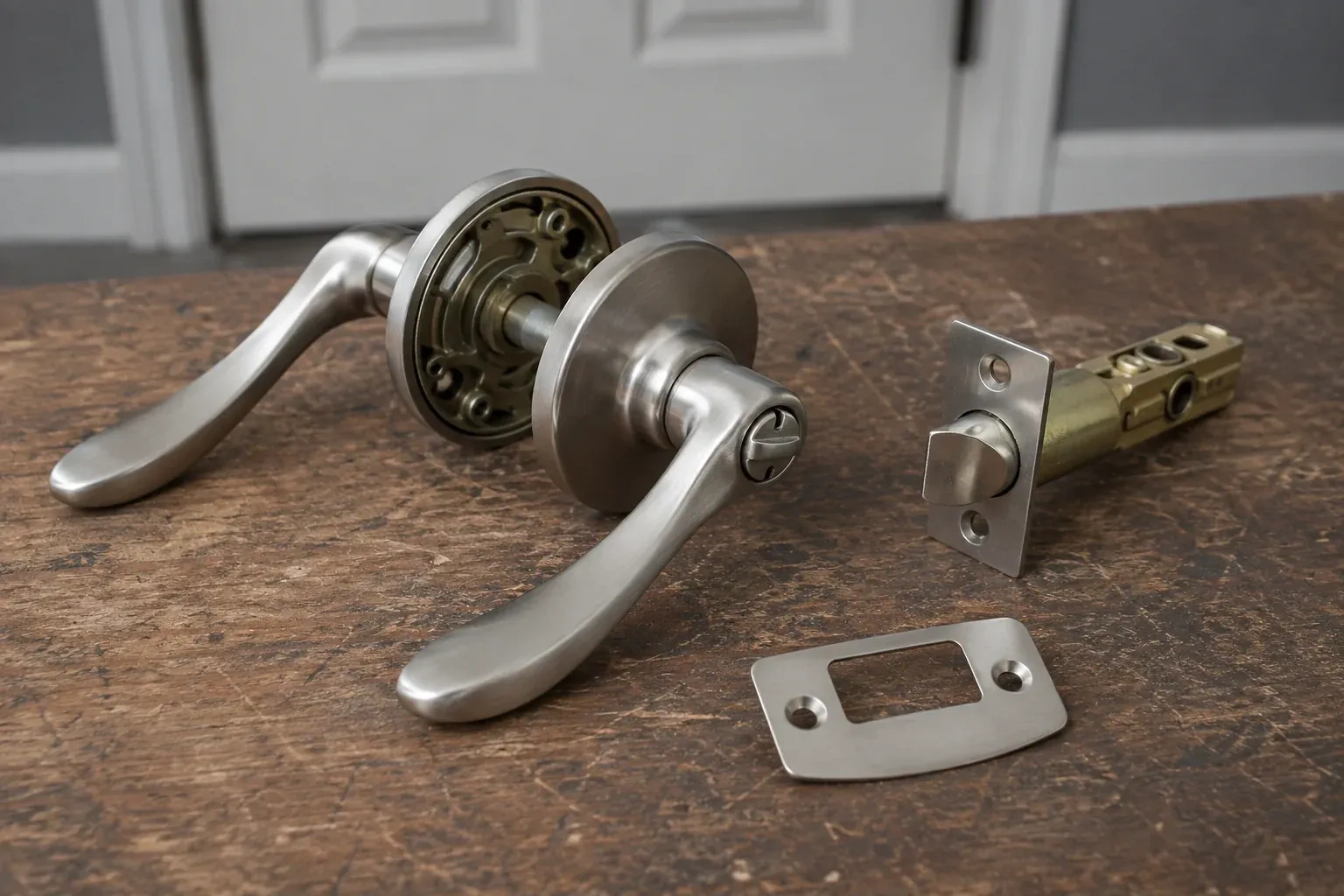
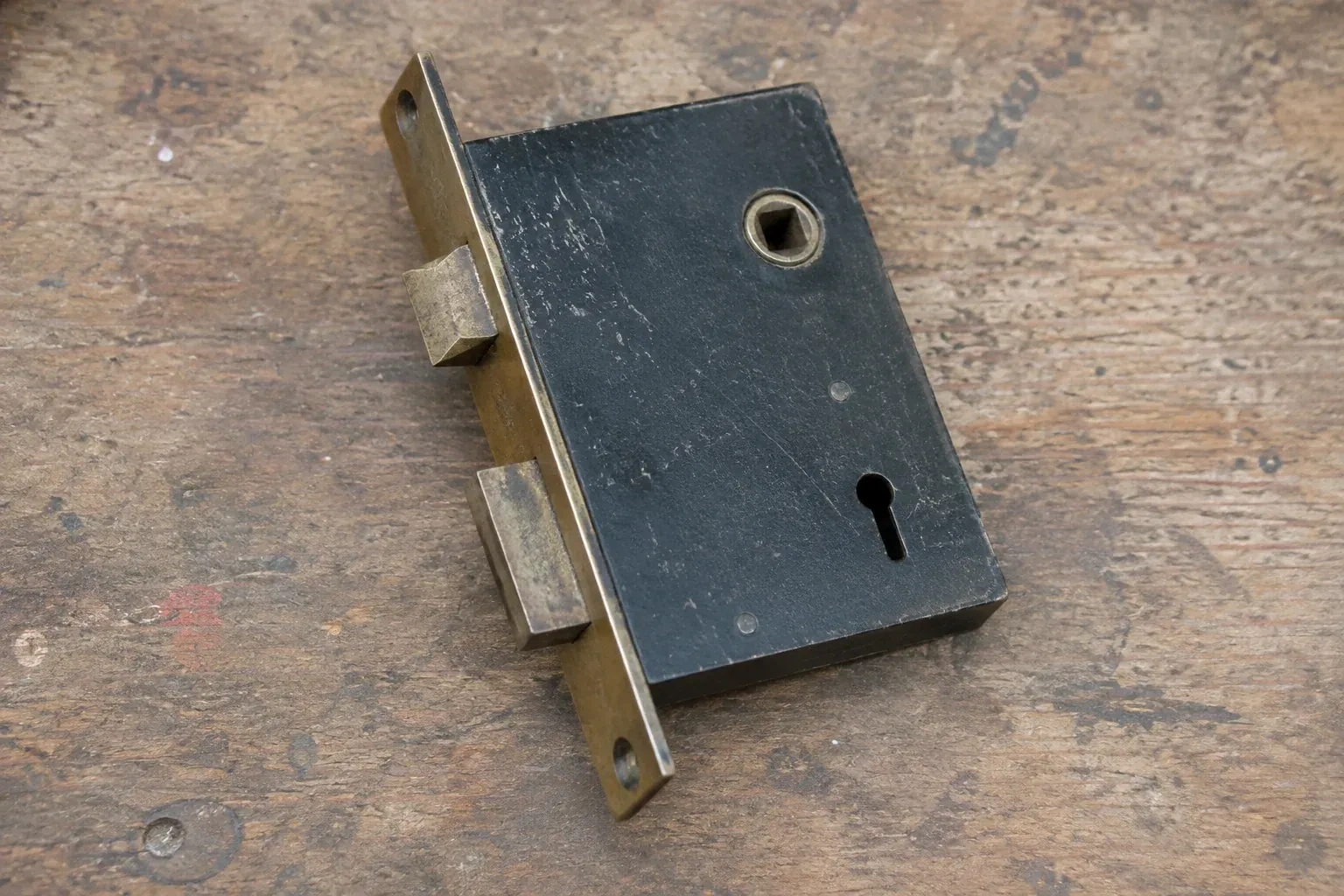
A photo of the lock, the gate or the entry door, taken from a few steps back and up close on the cylinder, tells the locksmith more than a verbal description usually can. Mentioning whether the gate is wood, metal or vinyl, roughly how the property is laid out, and whether the entry has any buzzer, keypad or electric component narrows down what hardware and parts to bring. None of this is required, but it does shape what shows up in the van.
What actually happens during a gate or building entry lock visit?
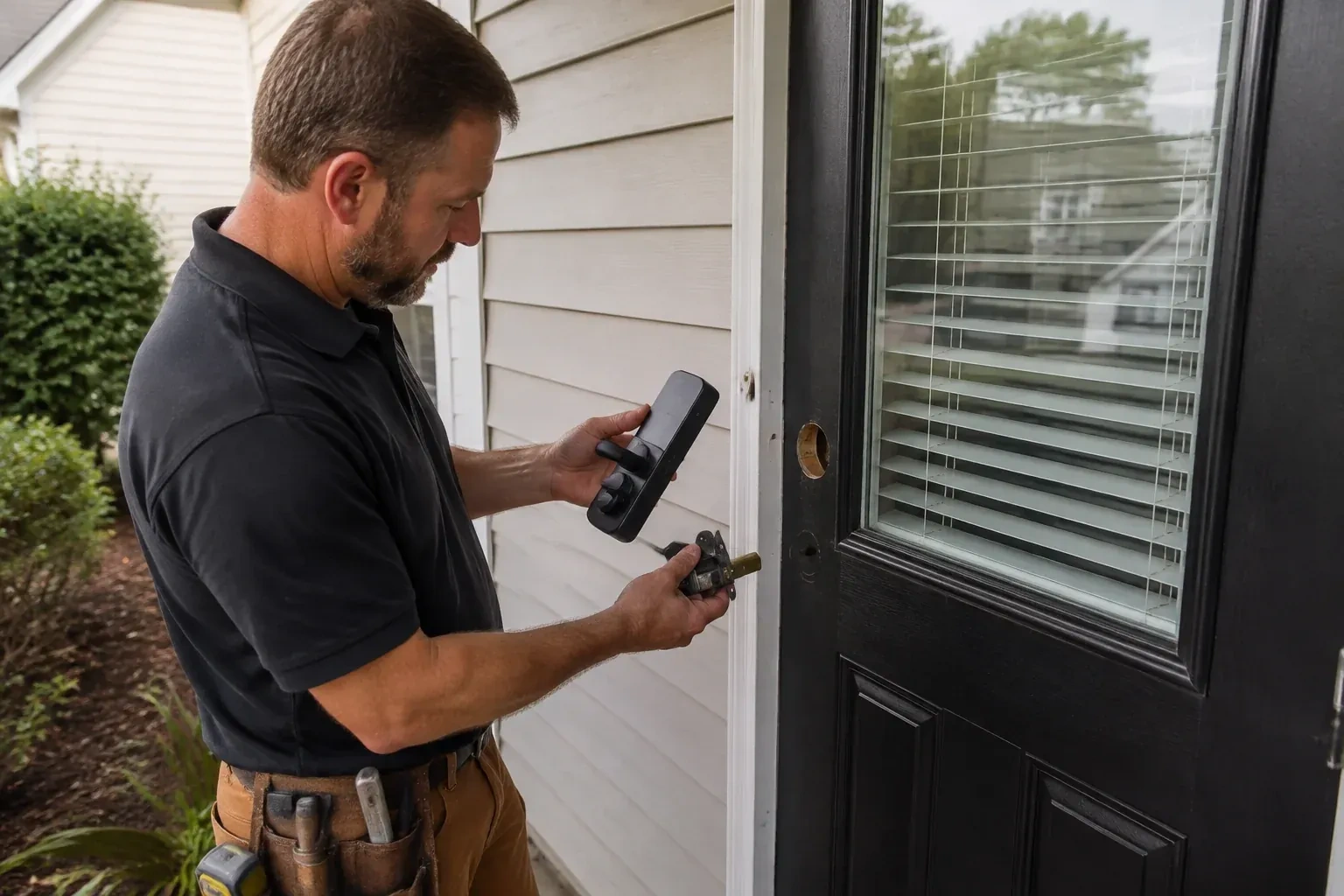
The locksmith first watches the gate or door move and checks the hardware fitted to it, then works out whether the issue sits in the lock, the closer, the hinges or the alignment of the frame itself. Whatever combination is found, the relevant piece is adjusted, rekeyed or replaced, and the whole assembly is cycled repeatedly afterward to confirm it closes, latches and locks the same way every time. Any keys involved are cut and tested before the visit is considered complete.
Does this service cover the gate itself, or only the lock?
Both, where the two are connected, which on a gate they usually are. A locksmith working on a gate lock also looks at the hinges, the post and the closer, since a lock rarely fails on its own when the real cause is a sagging gate or a post that has shifted. Work that goes beyond hardware the locksmith carries, such as rebuilding a rotted post or a damaged fence panel, is flagged so it can be handled by whoever normally does that kind of repair.
Gate & Building Entry Locks near you
Toronto, Ontario
Toronto information
- Town
- Toronto, Ontario
- In business
- 16 years
- Hours
- Open 24/7 · nights, weekends and holidays, same fees
- Phone
- (289) 804-7704
- Visits
- On-site assessment preferred. Request a visit or call.
What the census means at the door
58%
Older homes. About 58% of homes in Toronto were built in 1980 or earlier, according to the 2021 Census.
Layers of paint build up on older doors and frames, and a lock that seemed to fail is sometimes a latch glued shut by the last coat. Part of the visit in an older area is freeing hardware, cleaning the edges and checking the door swings true.
23%
Single-detached houses make up about 23% of homes in Toronto (2021 Census).
Townhouse rows often share a keyway chosen by the builder. A locksmith can move a household onto a keyway of its own so a neighbour's key, or a key from the construction phase, no longer has any chance of fitting.
Nearby
Open 24/7
Request a visit
The gate to the side yard used to close with a satisfying click.
Call now · open 24/7(289) 804-7704- On-site assessment preferred
- Same fees day, night or weekend
- 16 years in business