Plan ahead Commercial · Six Points
Access Control Installation in Six Points
Something went missing from the storeroom over a weekend, and when you ask who was in the building, the honest answer is anyone with a key. There is no list, no time stamp, no way to narrow it down.
Call now · open 24/7(289) 804-7704In plain words
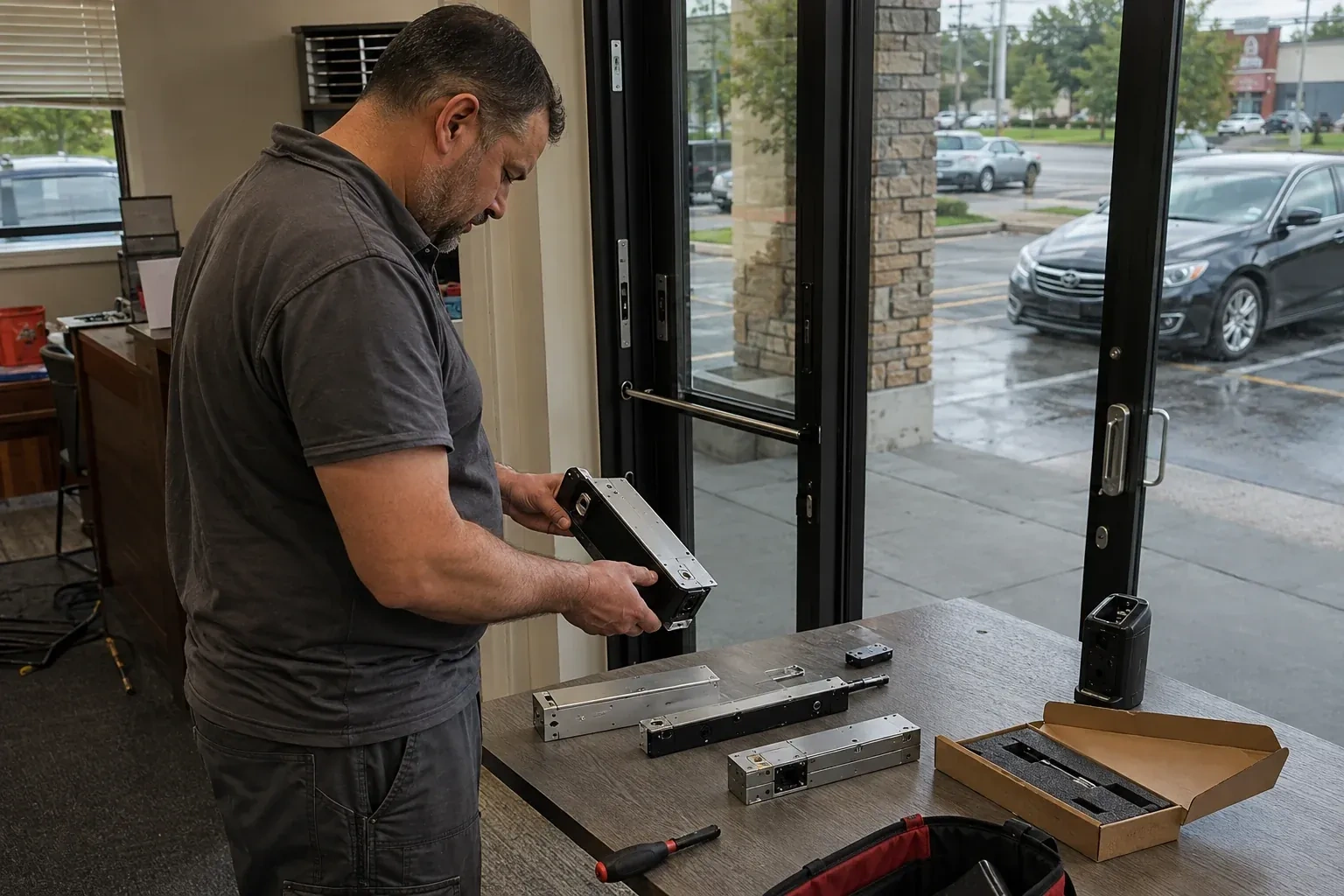
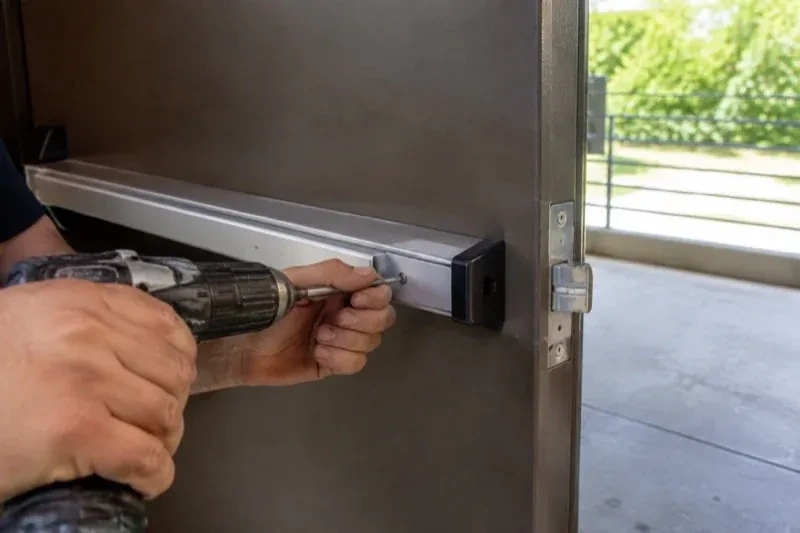
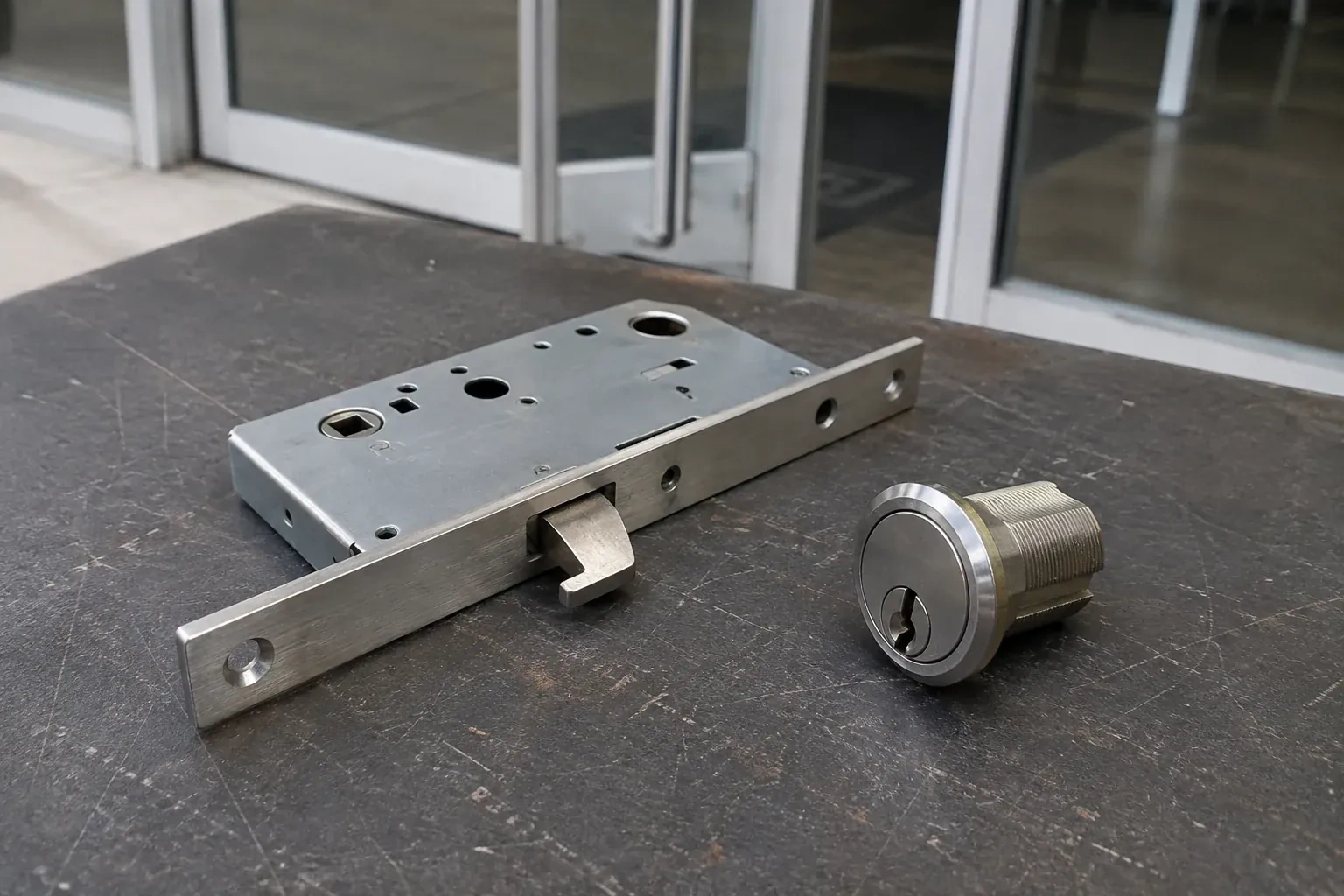
Locking hardware varies by opening: an electric strike, fitted into the existing frame, keeps the mechanical latch and releases it briefly for a valid credential; a magnetic lock clamps the door shut with an electromagnet and suits a frame or door that will not take a strike; and some openings use an electromechanical lock or a different controlled lockset entirely. Several of these can also be fitted with a mechanical override cylinder, so a lost signal, a dead battery, or a controller fault still leaves that particular door opening by key, though the option depends on the hardware chosen for it.
How the visit goesAnother employee left and the keys never came back. You changed the locks again, cut copies for everyone who stayed, and paid for a job that repeats itself the next time someone quits, taking a working key out the door with them.
Access Control Installation · Six Points
How the visit goes
- 1
Confirming what the system needs to do
Before any hardware is chosen, the locksmith sits down with whoever will administer the system afterward and works out what it actually needs to do: which doors deserve their own control, whose entry needs a record, whether one opening keeps different hours than another, and who should be able to add or remove a credential once the job is finished. This conversation shapes every choice that follows, from a single standalone keypad on one door to a networked controller running several openings on one schedule, and it is where the business, not the installer, sets the priorities the system is built around.
- 2
Enrolling cards, fobs and codes
Once schedules and access levels are ready, each credential is enrolled against a name, presented at a reader or entered at an enrolment station, and assigned to the access level matching the person's role. A keypad code is set and confirmed working at the door itself; a card or fob is tested the same way before it is handed over. The locksmith keeps a running list during enrolment so nothing is issued twice and nothing is left unassigned, and hands that list to the administrator as the starting record for the system going forward.
- 3
Keeping the mechanical override where it belongs
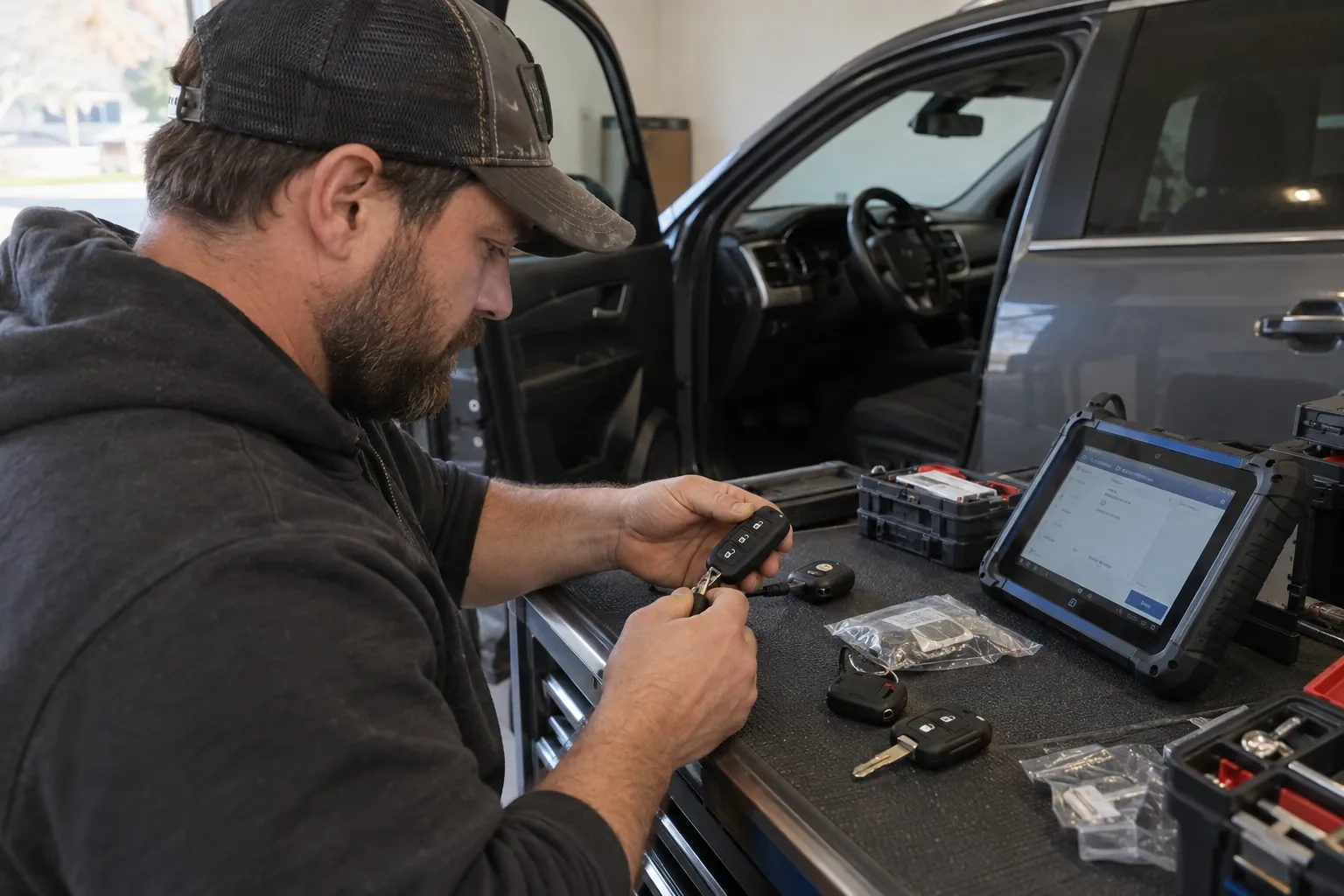
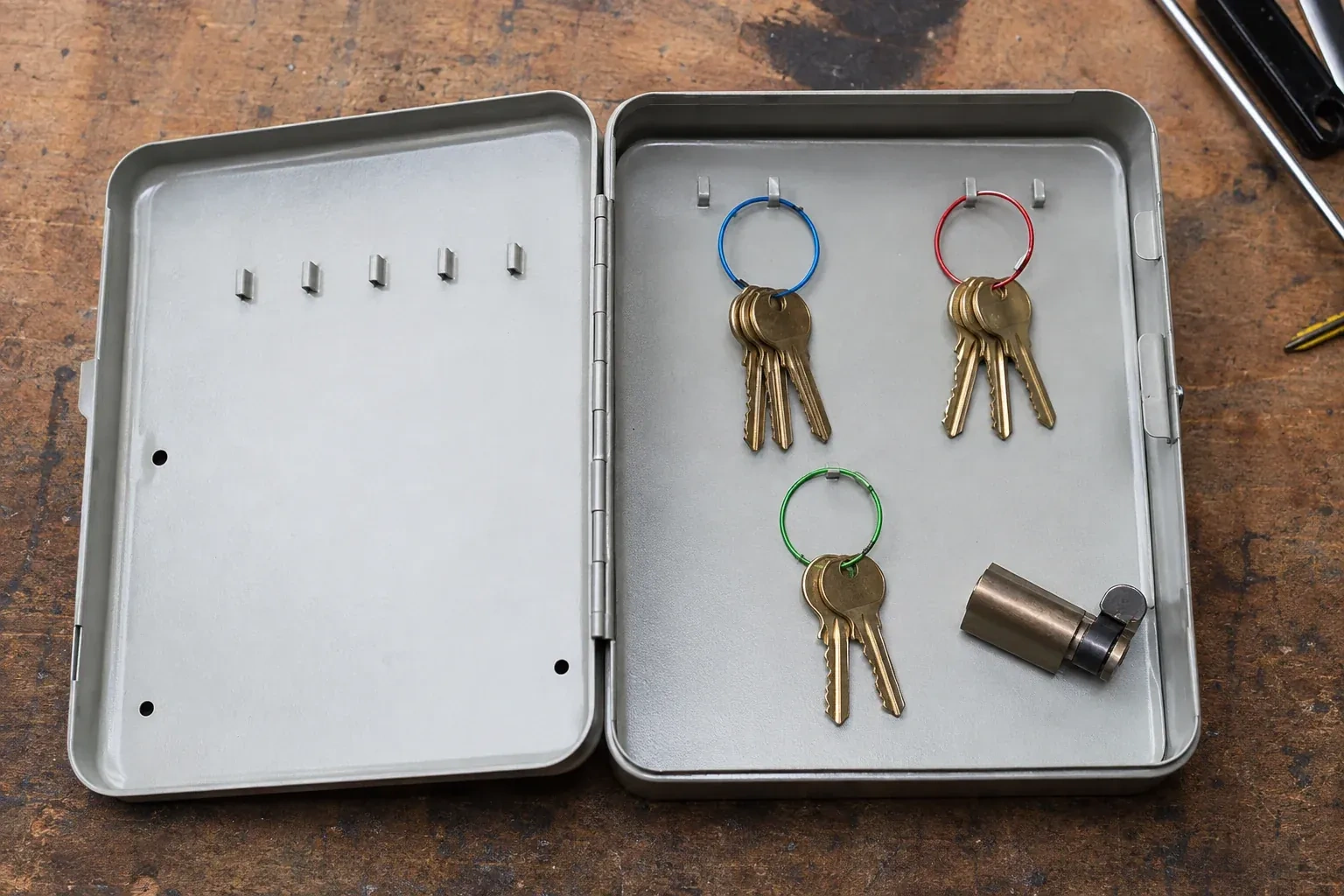
Where a controlled door has a mechanical override, that key is worth treating with the same care as any master key: held by a named person or two, not left in a drawer everyone can reach, and used mainly as a fallback rather than a daily habit. Because that key bypasses the electronic record entirely, using it routinely quietly undoes the audit trail the system was installed to provide, on any door where one is fitted. Keeping it for genuine emergencies is what keeps the electronic system the normal way in, and the key the backup it was meant to be.
In the van
- Credential cards and fobs
- Access control panel
- Request-to-exit devices
- Low-voltage cable
- Door position switches
What affects the quote
- 1
Room left for future doors
Sizing the controller and power supply with some spare capacity for a door or two added later costs a little more at installation but avoids a second controller purchase when the building later adds an opening.
- 2
Standalone or networked
A self-contained reader at one door is simpler than a networked controller managing several openings with shared schedules and a combined log, and the choice between them changes both the hardware list and the wiring involved.
- 3
Network readiness for a networked system
A networked controller needs a suitable connection point and technology-department approval to join the building's network; where that is not already in place, preparing it is a separate piece of the job from the door hardware itself.
Same fees day, night or weekend.
Access Control Installation: questions
What happens to the doors if the power goes out?
Outage behaviour depends on how that opening was built: battery backup can be sized to carry the reader, the lock and the controller through a typical outage, so a brief power loss need not lock anyone out or, on a fire-alarm-tied opening, lock anyone in, but that backup and any mechanical key override are specified per opening rather than assumed for every door. Fail-safe hardware unlocks once power has been out longer than the backup lasts; fail-secure hardware stays locked, and what opens it depends on the hardware chosen.
What credential types are available: cards, codes, fobs, phones?
A proximity card or fob held near a reader, a code typed on a keypad, or a mobile credential read from a phone are all in common use, and a single building can mix them by door or by person. Cards and fobs are simple to issue and switch off individually; a keypad needs no card to lose but a shared code eventually gets passed around; a mobile credential ties entry to a device the person already carries.
Do we still need physical keys after this is installed?
On hardware that supports it, yes: a conventional cylinder sits alongside the electronic reader, cut to work like any other key on the property, though some access-controlled locks are built without one. Where it is fitted, it is meant as a fallback rather than the everyday way in: if a battery dies, a controller faults, or the power stays out longer than the backup lasts, the door still opens by key while the issue is sorted out.
Access Control Installation near you
Toronto, Ontario
Six Points information
- Town
- Six Points, Toronto, Ontario
- In business
- 16 years
- Hours
- Open 24/7 · nights, weekends and holidays, same fees
- Phone
- (289) 804-7704
- Visits
- On-site assessment preferred. Request a visit or call.
What the census means at the door
58%
Older homes. About 58% of homes in Toronto were built in 1980 or earlier, according to the 2021 Census.
Where most homes were built decades ago, doors often still carry their original mortise locks and brass knobs. That hardware can usually be cleaned, re-sprung and kept in service, with a modern deadbolt added above it for strength without losing the look.
23%
Single-detached houses make up about 23% of homes in Toronto (2021 Census).
In a building, a lockout happens in a hallway rather than a porch, and the neighbours notice. A locksmith confirms you belong to the suite, opens the door with the least fuss the lock allows, and leaves the door and cylinder intact for the night.
Nearby
Open 24/7
Request a visit
Something went missing from the storeroom over a weekend, and when you ask who was in the building, the honest answer is anyone with a key.
Call now · open 24/7(289) 804-7704- On-site assessment preferred
- Same fees day, night or weekend
- 16 years in business