Emergency Lockouts · Toronto
Home Lockout Service
The key slides in and turns all the way round, but the bolt stays put. There is no click, no resistance, just a key spinning in a lock that has stopped listening to it after years of daily use.
Call now · open 24/7(289) 804-7704In plain words
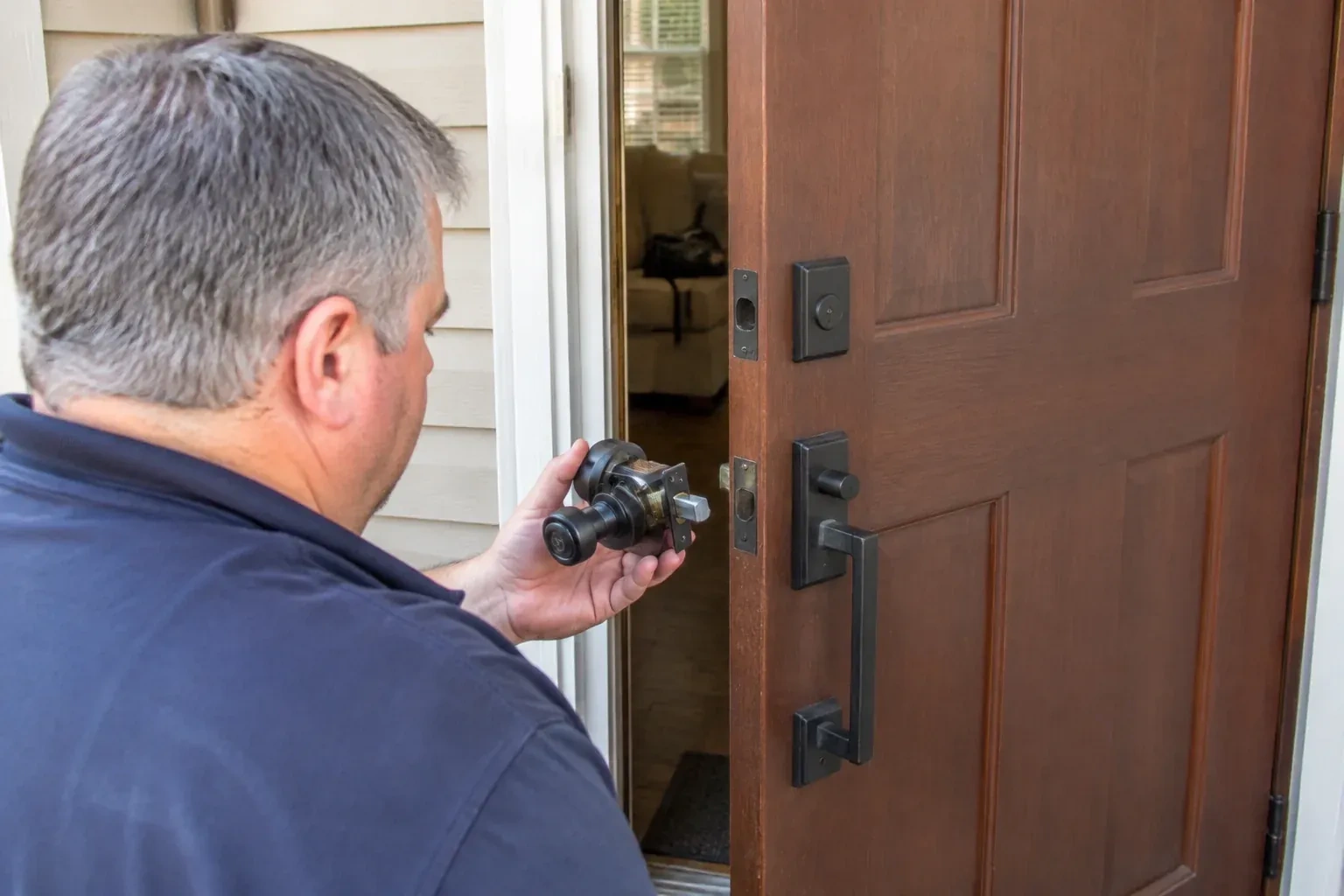
A home lockout service is a visit whose whole purpose is to get you back inside your own home when the door is locked against you. The locksmith first confirms you have the right to be there, usually by matching photo identification to the address or seeing a lease, deed or property-management record. Then the lock is identified and opened with the gentlest method the hardware allows, so the door and the lock itself are usually kept in working order. Once you are inside, any further step such as rekeying or a new cylinder is discussed as its own decision.
How the visit goesAfter a week of humid weather the back door has swollen in its frame. The key turns, you can feel the bolt trying to move, but it is jammed hard against the strike plate and the door refuses to open.
Home Lockout Service · Toronto
How the visit goes
- 1
Where the key went
The next question is about the key rather than the lock. A key left on the hall table means the lock is healthy and only the door needs opening. A key lost on a bus, dropped in a parking lot or taken with a stolen bag means a stranger could be holding it, which changes the advice given after entry. A key that turns without moving anything points to wear inside the cylinder or a broken tailpiece, and a key that snapped calls for extraction before anything else. Ten seconds of honest history about the key saves guesswork and shapes the whole visit.
- 2
Working a deadbolt open
A thrown deadbolt has no bevel to exploit, so the cylinder itself has to be persuaded. The locksmith applies light rotational tension to the plug and sets each pin to the shear line, or reads the pin heights with a decoder and cuts a key that matches. Some cylinders let the plug turn one way only; a plug spinner flicks it past the point where the tailpiece engages so the bolt can retract. Security pins slow the process rather than stop it. The bolt draws back, the door opens, and the cylinder is cycled with your key afterwards to confirm nothing inside was disturbed by the work.
- 3
Looking after the cylinder afterwards
A lock that has just been opened deserves a little care so it keeps turning sweetly. Twice a year, follow your lock's own maintenance guidance: many residential cylinders take a puff of dry graphite or PTFE lubricant into the keyway, some a specified liquid product instead; general-purpose oil sprays attract dust and gum the pins. Wipe grit off your keys before using them, and retire a key that has worn thin or bent, cutting a new one from the code or from a crisp original rather than from a tired copy. If the key starts to need a wiggle to turn, that is the cylinder asking for attention early, while it is still an easy fix rather than a lockout.
In the van
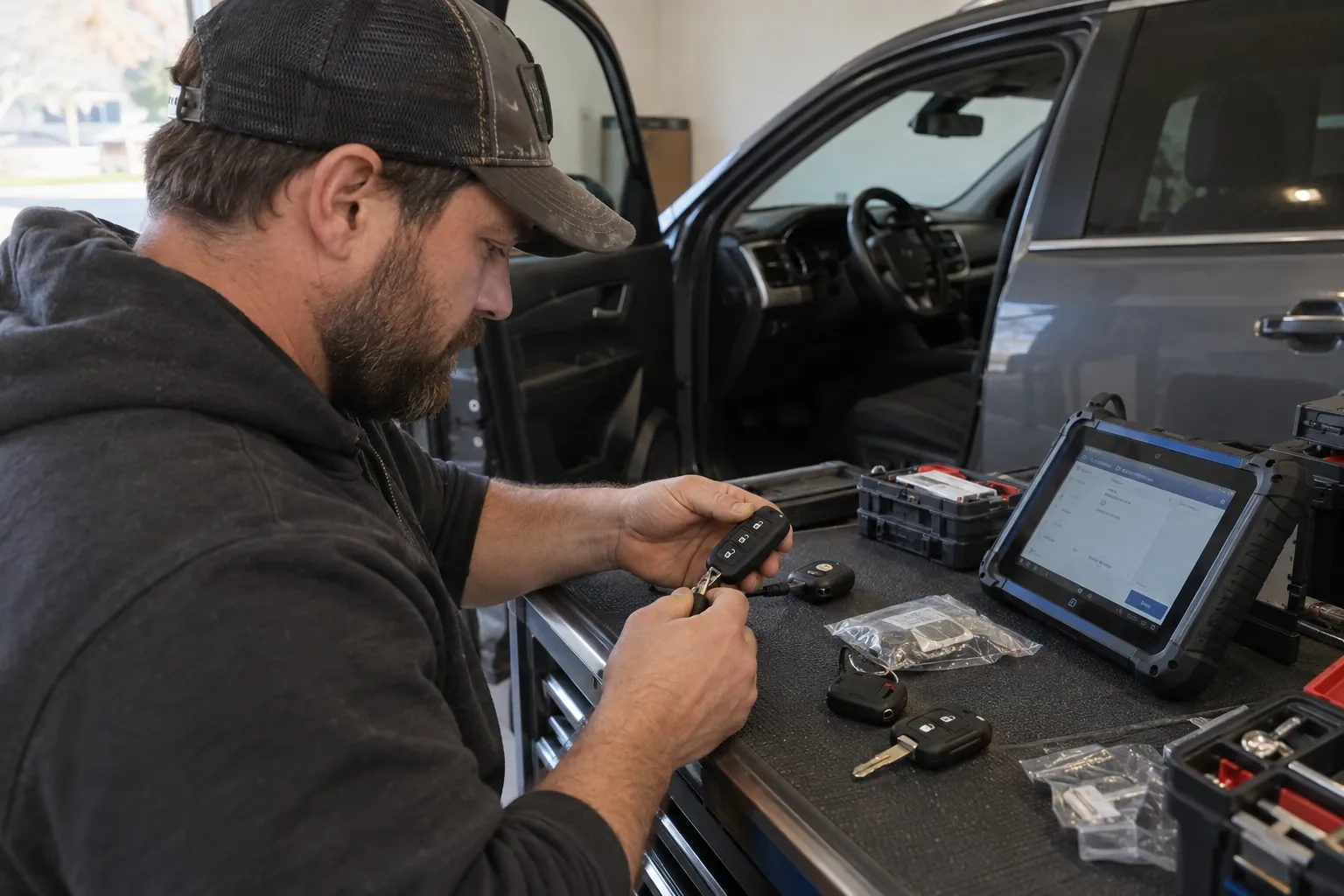
- Key blanks and key cutter
- Cylinder decoder
- Lock de-icer
- Plug spinner
- Pick and tension tools
What affects the quote
- 1
Distance to your door
Travel is part of every call-out. A house across town and a rural property at the end of a long road involve different driving time, and the quote reflects the trip as well as the work.
- 2
How many locks need opening
One front door is the simplest case. A front door plus a garage man-door, a storm door that latched and a mailbox in the lobby is a longer visit with more hardware to work through.
- 3
Electronic lock work
A dead smart lock may need batteries, a reset, reprogramming of codes or pairing to your phone once the door is open. Each of those is a small task that the quote names separately.
Same fees day, night or weekend.
Home Lockout Service: questions
What is the difference between rekeying and replacing a lock?
Rekeying keeps the lock you have and changes only the pins inside the cylinder so a new key operates it and the old one no longer does. It suits hardware that is in good shape and simply needs a fresh key. Replacing swaps the whole lock or cylinder for new hardware, which makes sense when the existing lock is worn, damaged, of low grade, or when you want a different style or a keypad. Either can be done during a lockout visit.
My key turns but the door stays locked. What is going on?
A key that spins freely without moving the bolt usually means the connection between the cylinder and the bolt has failed: the tailpiece or cam at the back of the cylinder has broken or slipped, or the internal parts of an older mortise lock have worn. The good news is that this is a hardware fault rather than a lost key, so once the door is opened the fix is a repaired or replaced cylinder and your keys keep working.
What should I have ready when I call about a lockout?
The address and which door you are outside of, what kind of lock is on it as far as you can tell, and where the key is: inside, lost, broken or simply refusing to turn. Mention whether the door is a rental, whether anyone is inside, and whether the lock is electronic. If you have photo identification on you, say so; if not, say that too so the verification route is agreed before the locksmith arrives.
Lockout Services
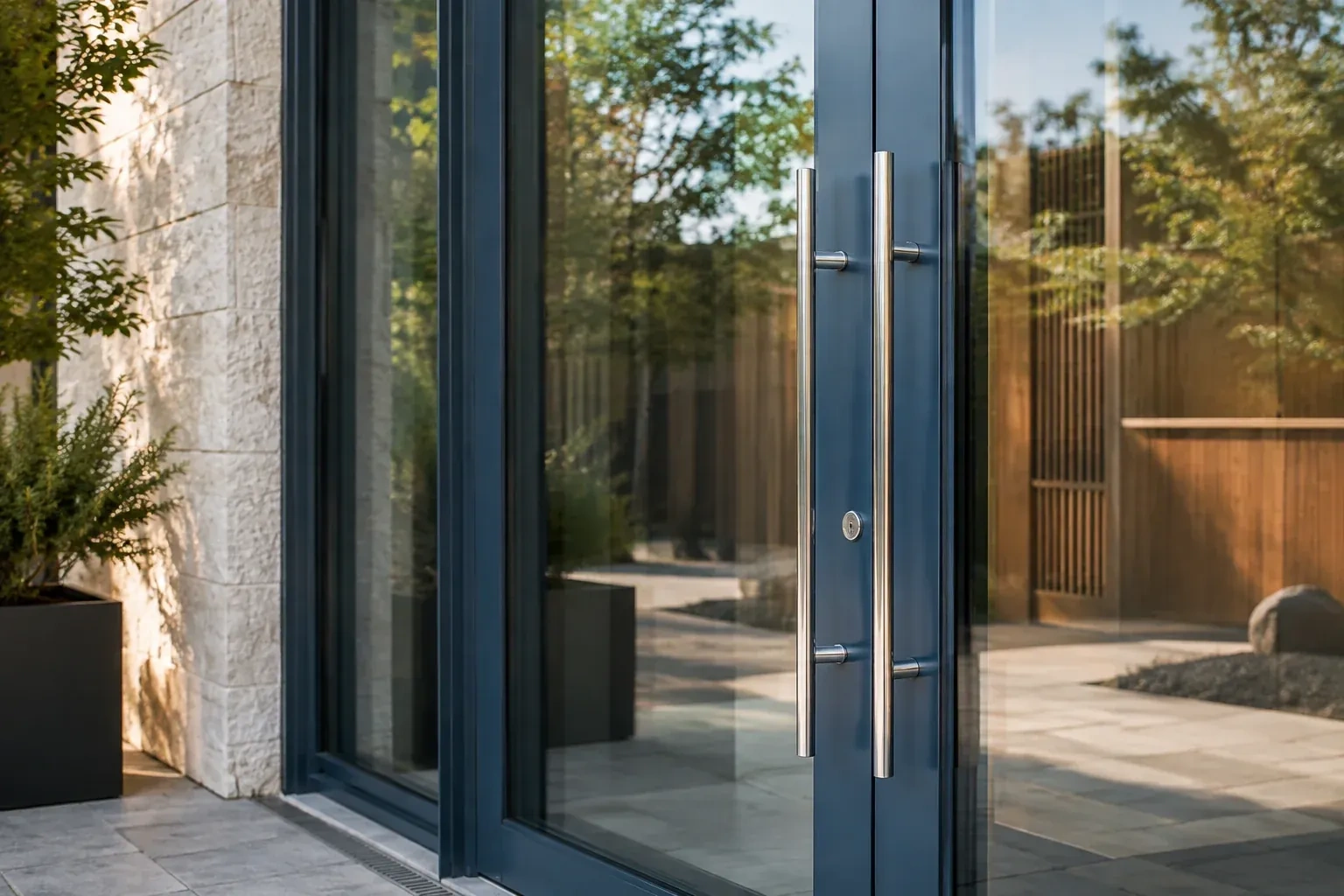 EmergencyBusiness Lockout ServiceIt is ten to nine, three staff are on the sidewalk with their coffees, and the key that has opened the glass front door for six…
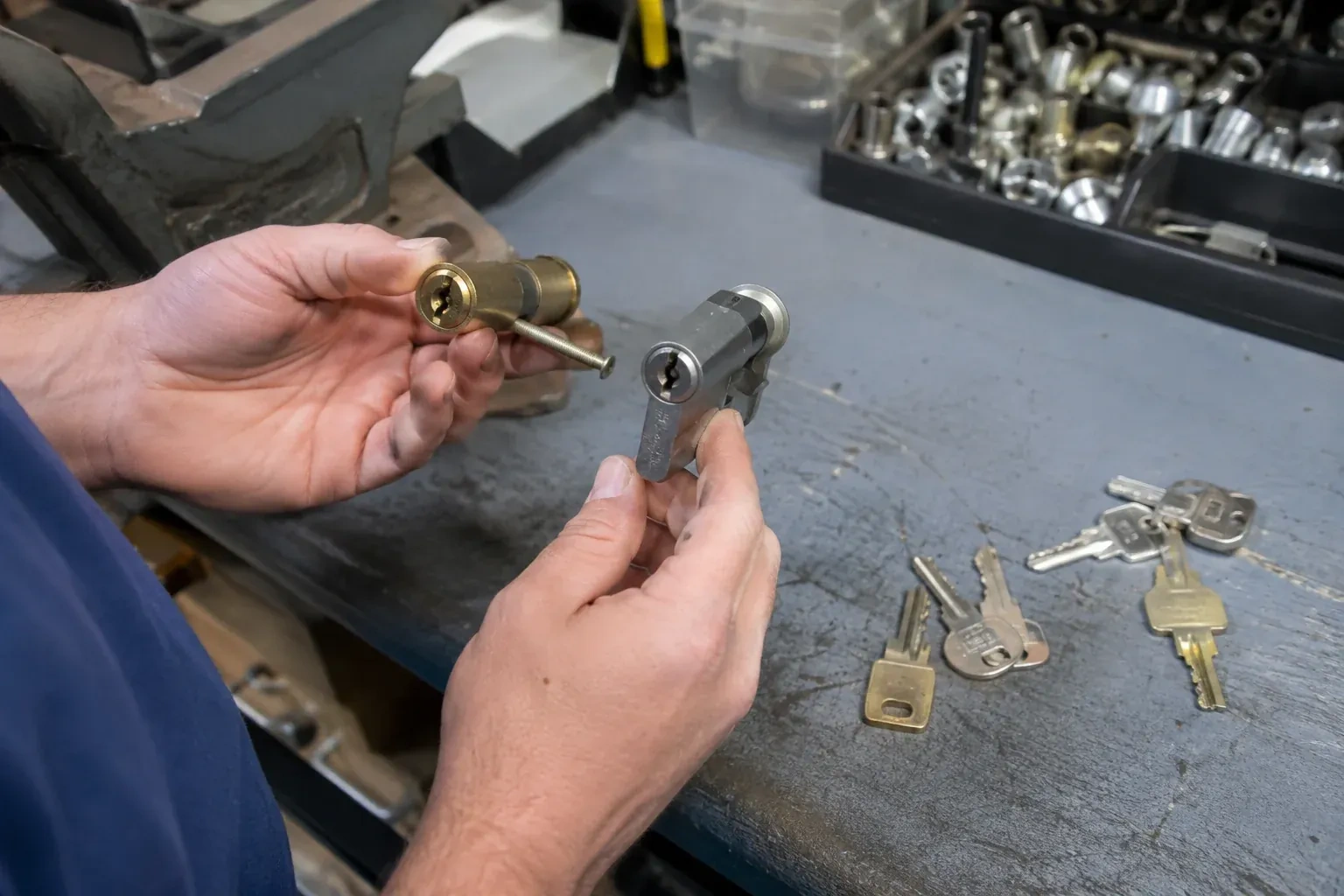 EmergencyBroken Key ExtractionYou were locking up on the way out when the key broke in the lock.
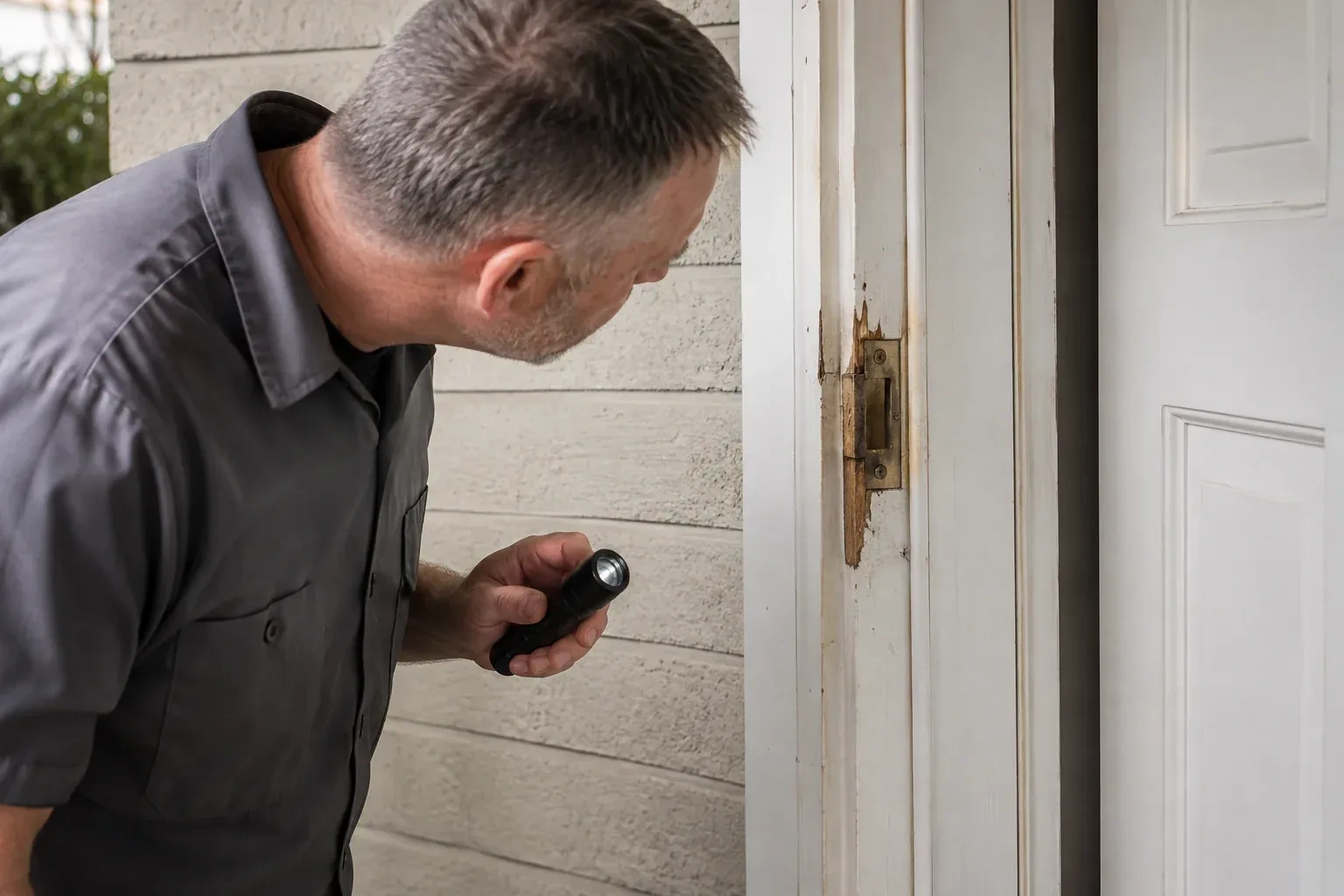 EmergencyBreak-In Damage Lock RepairThe shop's aluminum door has a bent meeting stile and the hookbolt is jammed half out.
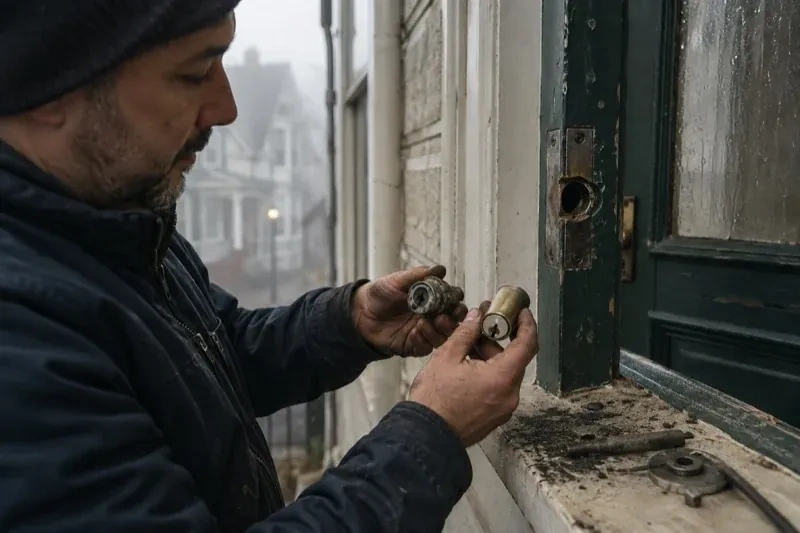 EmergencySeized & Jammed Lock OpeningYou are inside, the deadbolt is thrown, and the thumb-turn will not budge.
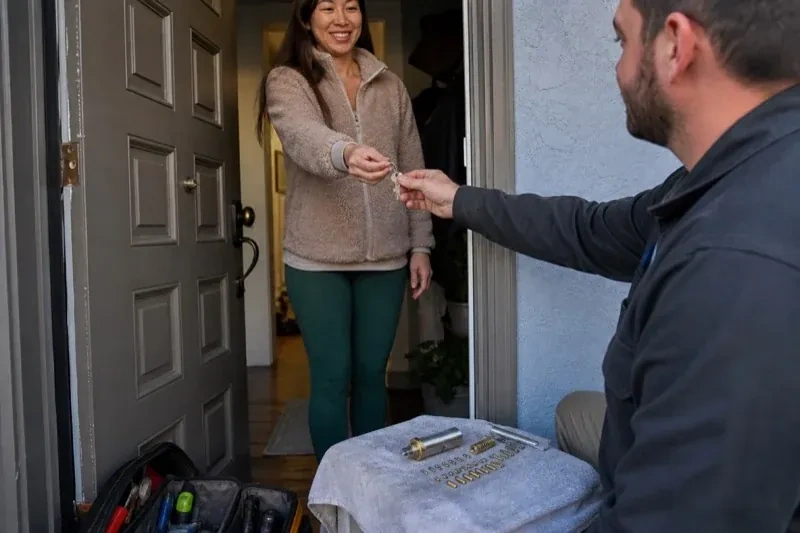 EmergencyLost Keys — Same-Visit RekeyThe spare under the planter by the side door is gone.
Home Lockout Service near you
Toronto, Ontario
Toronto information
- Town
- Toronto, Ontario
- In business
- 16 years
- Hours
- Open 24/7 · nights, weekends and holidays, same fees
- Phone
- (289) 804-7704
- Visits
- On-site assessment preferred. Request a visit or call.
What the census means at the door
58%
Older homes. About 58% of homes in Toronto were built in 1980 or earlier, according to the 2021 Census.
Layers of paint build up on older doors and frames, and a lock that seemed to fail is sometimes a latch glued shut by the last coat. Part of the visit in an older area is freeing hardware, cleaning the edges and checking the door swings true.
23%
Single-detached houses make up about 23% of homes in Toronto (2021 Census).
Townhouse rows often share a keyway chosen by the builder. A locksmith can move a household onto a keyway of its own so a neighbour's key, or a key from the construction phase, no longer has any chance of fitting.
Nearby
Open 24/7
Request a visit
The key slides in and turns all the way round, but the bolt stays put.
Call now · open 24/7(289) 804-7704- On-site assessment preferred
- Same fees day, night or weekend
- 16 years in business