Plan ahead Commercial · Humber Valley
Panic & Exit Hardware in Humber Valley
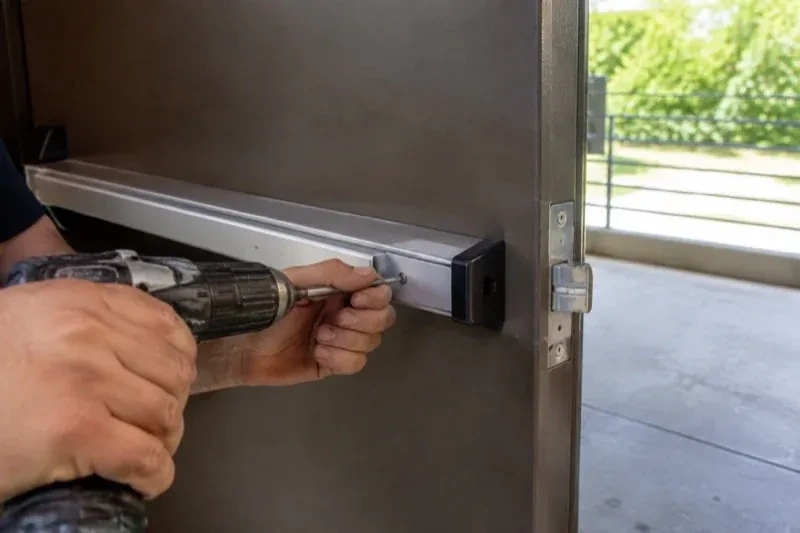
The crossbar on the loading-dock door barely returns anymore. Someone has to lean into it with a shoulder, and twice this month it has stuck half-latched, propped by whatever was nearest.
Call now · open 24/7(289) 804-7704In plain words
Which device goes on a door depends on what the door already is. A single interior door usually takes a rim exit device and a simple pull or lever outside. Listed fire-exit hardware covers many tall, narrow-stile and fire-rated openings too, so a mortise or vertical-rod device is chosen for its latching arrangement or the door's own preparation, not from height or fire rating alone, and a fire-rated opening can never be held open by a mechanical dogging function. Reading the door correctly before ordering hardware is most of the job; fitting it well is the rest.
How the visit goesA padlock went on the stockroom's back door years ago for security and nobody has thought about it since, until the walkthrough this week pointed out that the same door is the room's only other way out.
Panic & Exit Hardware · Humber Valley
How the visit goes
- 1
Confirming why the door needs this hardware
The visit starts with the reason exit hardware is being discussed at all: an occupant load that has crossed a threshold, a fire inspector's note, a new use for the room, or an existing device that has stopped working the way it should. Confirming this first decides everything downstream, because a door required to have a releasing device is treated differently from one where an owner simply wants easier egress. Whoever is responsible for the building is asked directly what triggered the visit, and the answer is recorded alongside the door it concerns before any hardware is chosen.
- 2
Choosing the device for the opening
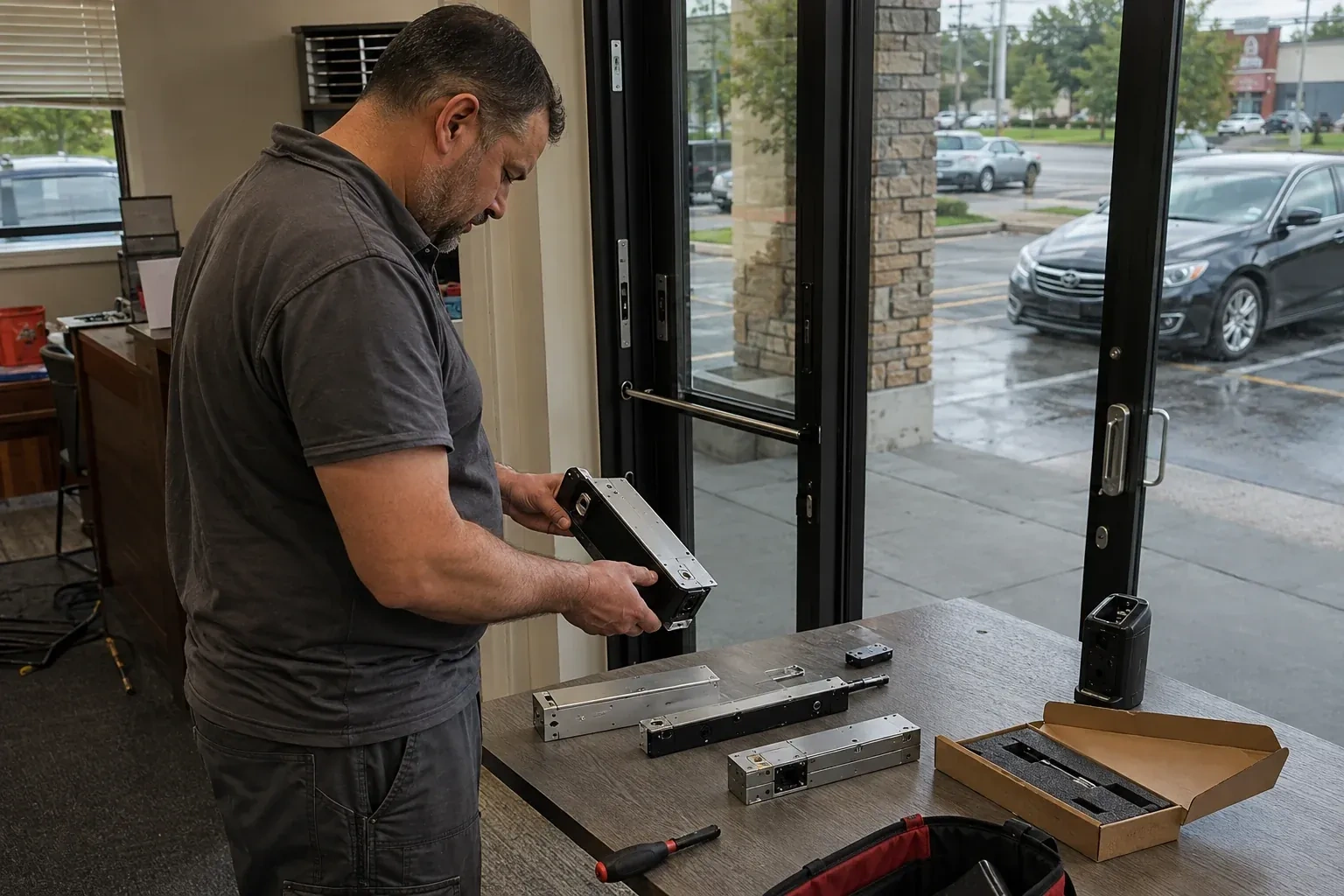
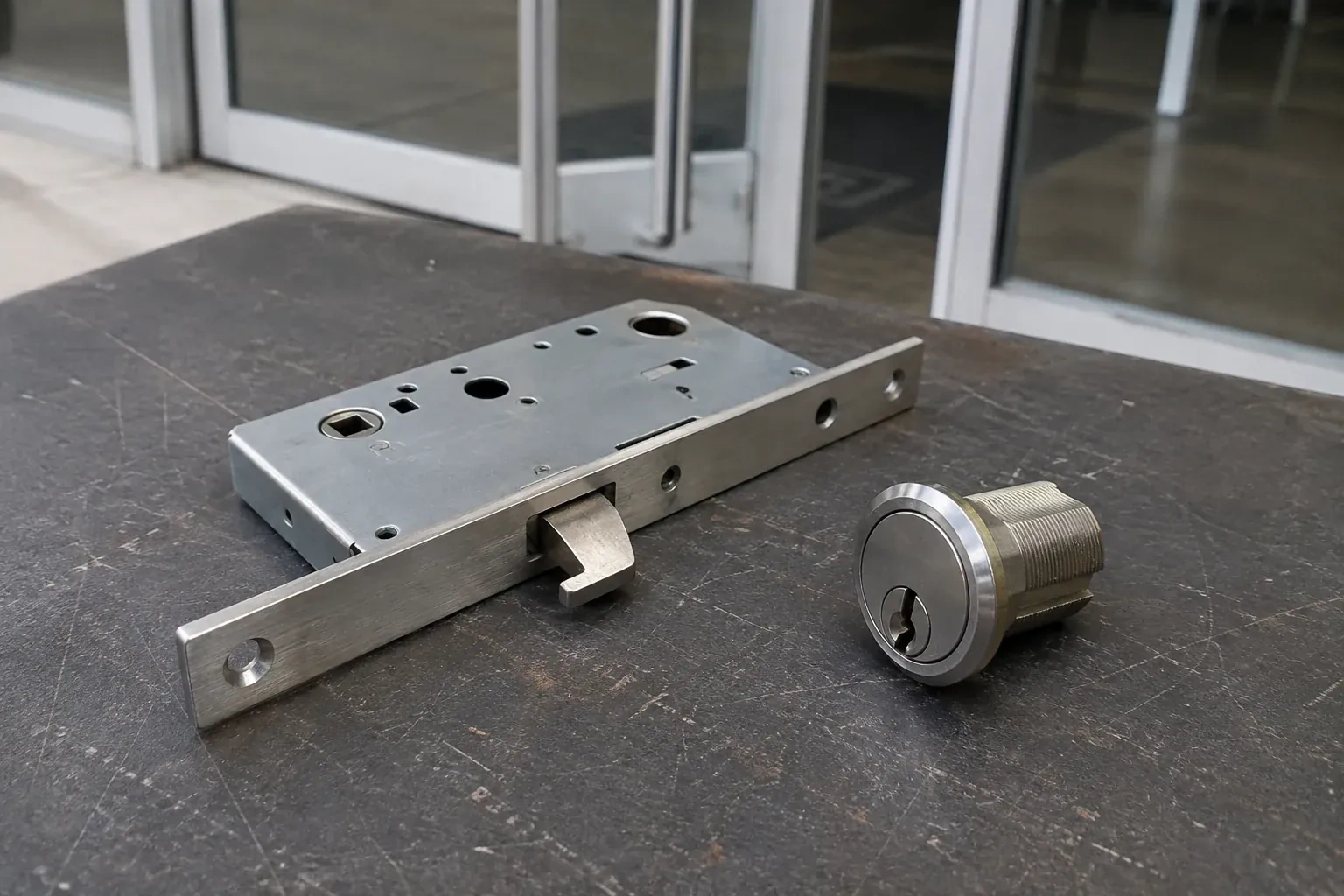
With the assessment done, the locksmith matches a device family to the door: a rim exit device for most single doors, a mortise device where a heavier-duty case suits the opening, or a vertical-rod device where latching is needed at both the top and bottom of the frame. Fire-rated openings take fire exit hardware specifically listed for that duty, never a standard panic device pressed into a role it was not built for, and listed rim fire-exit hardware covers a wide range of those openings on its own. The chosen device is matched to the door's width, handing and existing preparation before it is ordered.
- 3
A written record for the next review
The building now has a document naming every device fitted, its rating, the trim and any electrified function, and the tests each assembly passed on installation day. That record is what a fire inspector, an insurance reviewer or a new facilities manager will ask for, and having it ready saves reconstructing the history of a door from memory or from whatever sticker happens to still be on the case. It is worth keeping with the building's other life-safety paperwork.
In the van
- Strike and reinforcement
- Installation template and jig
- Astragal and mullion hardware
- Outside trim (pull, lever or cylinder)
- Dogging key or keyed cylinder
What affects the quote
- 1
Fire-rated versus non-rated opening
A fire-rated door needs hardware specifically listed for that assembly and installed to keep the rating intact, which is more involved than fitting a standard device to a non-rated door.
- 2
Number of openings involved
One door with a single device is the simplest case. A building with several affected exits, such as doors from a stairway plus an assembly-room exit, is quoted as the sum of each opening's own work.
- 3
Device family required
A rim device suits many single doors with modest work. A mortise or vertical-rod device, or hardware built to a fire-exit listing, takes more preparation and generally more hardware, which the quote reflects.
Same fees day, night or weekend.
Panic & Exit Hardware: questions
How is panic hardware different from fire exit hardware?
Panic hardware and fire exit hardware share the same push-to-release action, but fire exit hardware is additionally tested and listed for use on a fire-rated door assembly. That extra listing matters because a fire door has to keep an active latch bolt at all times; it cannot carry a mechanical dogging function the way ordinary panic hardware sometimes can, so the two are not interchangeable on a rated opening.
Can I still lock the door from outside?
Yes. The releasing device only governs the inside of the door; the outside gets its own trim, a pull, a lever with a cylinder, or a keyed cylinder alone, chosen for how that door is entered. Locking or unlocking that outside trim has no effect on the inside crossbar, which always releases the latch under a push, so entry security and exit function are handled as two separate questions.
Is delayed-egress hardware allowed here?
Delayed-egress locking has a defined place in the codes that cover it, generally paired with sprinkler protection and a fire alarm system, and it is not a way to lock a door indefinitely; a short delay still releases on its own once the push is held, and always releases as soon as a fire alarm signal arrives. Whether it suits a given opening depends on the occupancy and the authority having jurisdiction, so it is confirmed with them before it is specified.
Panic & Exit Hardware near you
Toronto, Ontario
Humber Valley information
- Town
- Humber Valley, Toronto, Ontario
- In business
- 16 years
- Hours
- Open 24/7 · nights, weekends and holidays, same fees
- Phone
- (289) 804-7704
- Visits
- On-site assessment preferred. Request a visit or call.
What the census means at the door
58%
Older homes. About 58% of homes in Toronto were built in 1980 or earlier, according to the 2021 Census.
Period hardware on older homes deserves matching parts, not a mismatched modern set. A locksmith who works among such houses keeps finishes and styles that suit them, so a repaired or replaced lock still looks like it belongs to the door.
23%
Single-detached houses make up about 23% of homes in Toronto (2021 Census).
Townhouses share walls but usually have their own front door and often a back door or garage. Keying both alike, and checking the strike on the less-used door, is the everyday work in a neighbourhood of attached homes.
Nearby
Open 24/7
Request a visit
The crossbar on the loading-dock door barely returns anymore.
Call now · open 24/7(289) 804-7704- On-site assessment preferred
- Same fees day, night or weekend
- 16 years in business